
English| EUR
Suggested for you
More currencies
Choose a language
Lake Brienz remains navigable through winter, but cold-season paddling requires guided supervision, specialized equipment, and an understanding of alpine lake conditions between November and March. This guide covers tour availability, safety protocols, and the logistics of winter kayaking on one of Switzerland's most visually distinctive bodies of water.
Quick answer
Winter paddling is conducted exclusively as guided group tours due to water temperatures that remain between 4°C and 8°C throughout the season, requiring drysuits and thermal layers provided by operators. Tours depart from Bönigen and last approximately two to three hours depending on weather and group pace.
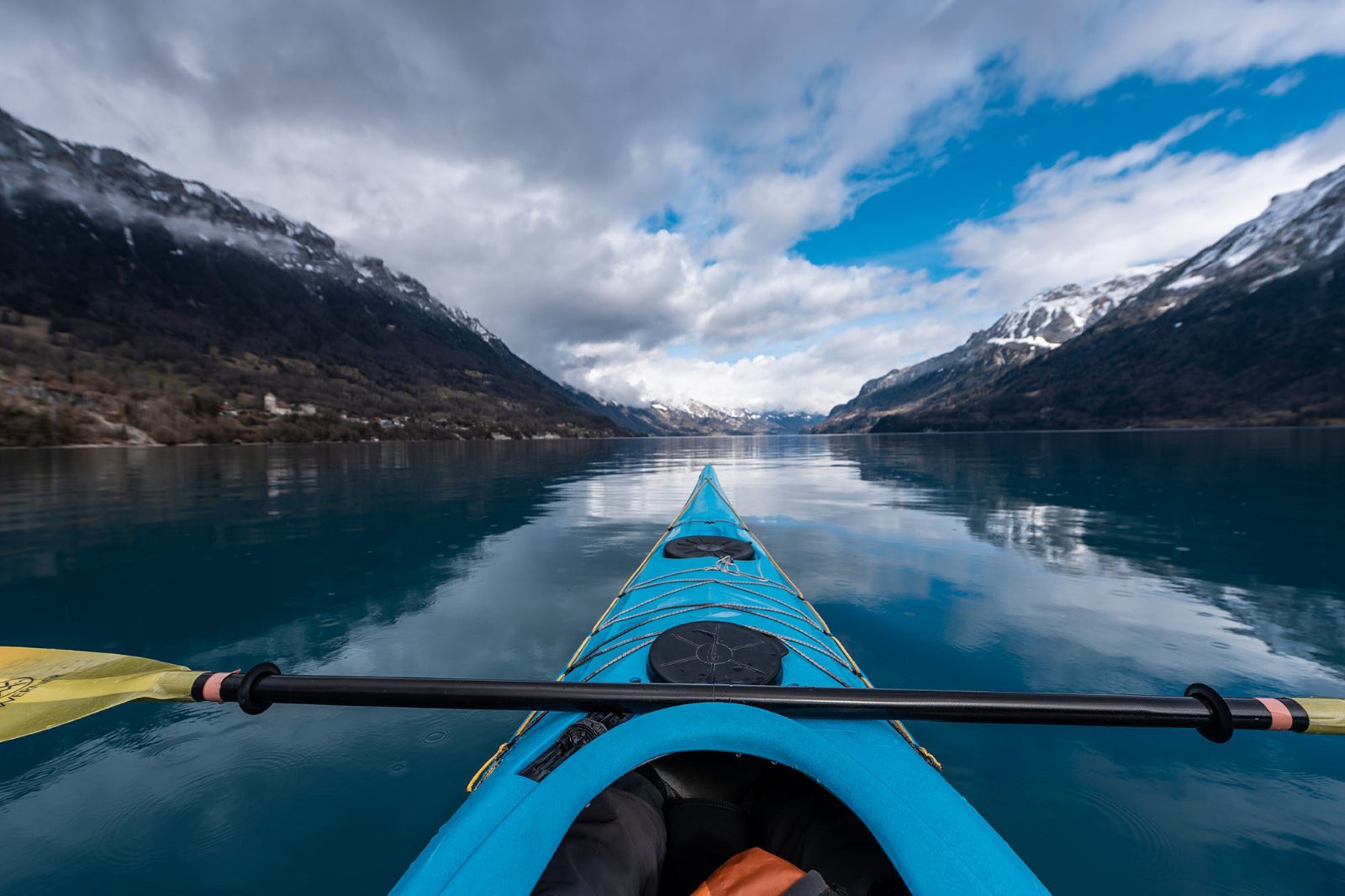
Lake Brienz holds its turquoise color through winter, a result of glacial flour suspended in the water that scatters light even under overcast skies. While the lake never freezes due to its depth and flow patterns, winter kayaking on Brienzersee operates under stricter safety protocols than summer paddling, with mandatory guide supervision and specialized cold-water gear. Winter kayaking season on Lake Brienz typically runs from late November through early March, with tour availability dependent on wind conditions rather than temperature alone. The Föhn wind, a warm downslope phenomenon common in the Bernese Oberland, can create sudden gusts that make paddling unsafe even on relatively mild days. Operators monitor forecasts closely and may reschedule departures with short notice. Water temperature remains stable between 4°C and 8°C throughout winter, cold enough that immersion without a drysuit poses immediate risk. All winter tours provide full drysuit systems, neoprene gloves, and insulated paddling jackets as standard equipment, with participants instructed to wear merino or synthetic base layers underneath. The lake brienz kayaking winter experience differs significantly from summer outings in visibility and shoreline access. Snowfall on the surrounding peaks often extends to lake level, and many of the small beaches used as rest stops in warmer months become inaccessible. Tour routes in winter tend to stay closer to the southern shore between Bönigen and Iseltwald, where the mountainside provides some wind shelter and the water remains slightly calmer. The reduced daylight hours between December and February also limit departure windows, with most tours launching between mid-morning and early afternoon to maximize available light and avoid the coldest parts of the day. Guided winter tours from Bönigen include a safety briefing that covers self-rescue techniques, cold-water immersion response, and group communication signals. Participants are required to demonstrate basic swimming ability and must be comfortable with the possibility of capsizing in cold water, though modern sit-on-top kayaks and guide proximity reduce that risk substantially. Photography is included in the tour price, with guides capturing images throughout the paddle using waterproof equipment. The contrasting palette of turquoise water, snow-covered peaks, and bare shoreline forest creates visual conditions that many paddlers consider superior to the busier summer season.
“The lake holds its turquoise color through winter, a result of glacial flour that scatters light even under overcast skies.”
Winter kayaking demands advance booking and cold-weather preparation to ensure safety on the lake.
Everything you need to know about lake brienz kayaking winter
Yes, guided sessions are suitable for beginners as instructors provide all necessary drysuits and safety gear to keep you warm. You will receive a brief orientation before launching into the calm, turquoise waters.
You should wear thermal base layers made of synthetic materials or wool under your drysuit to maintain body heat. Avoid cotton, as it traps moisture and cools the body down quickly.
Guided tours are highly recommended to ensure safety and navigation, as water conditions can be unpredictable during the colder months. Booking a professional trip guarantees you have the correct equipment and expert local knowledge.
While air temperatures are chilly, the lake water remains relatively stable throughout the year. Your high-quality drysuit provides excellent insulation, allowing you to enjoy the alpine scenery comfortably while on the water.